I learned how to cook from my mom and my sitter. I would watch each of them in the kitchen making delicious meals. This time wasn’t only spent learning to cook, it was also filled with a lot of life lessons through the stories they would tell as I watched or helped them along. I don’t recall when I was first allowed to use a sharp knife. I do know that fear of cutting myself was top of mind.
It never sunk in until my adult life that not everyone gets these memorable experiences. Either they didn’t take the time or they were never offered the opportunity. For years my husband and I led a Bible study group of people that were post college-age. I would sometimes show one or two how to cook a specific meal and, because I use onions often in my cooking, I was shocked to learn that cutting onions was considered an intimidating art.
There are two main things to keep in mind when using a knife.
1. Make sure it is sharpened – when knives get dull, their slices become unpredictable because the user applies varying pressure.
2. Watch your fingers. Fold your fingers under when grasping the food you are cutting. When slicing, use line of sight to follow the line that you are about to cut. In the case of the horizontal cut on the onion below, watch where your palm rests if you are holding the onion in place. Does it dip below the line? Move it out of the way before you begin.

The first step is to prepare your onion for cutting. Regardless of the form you plan your onions to be in their final stage, preparation is almost always the same. Take your onion and cut off the cap at the stem (not the root). Then, cut your onion in half from stem to root. My process for this and other cuts is usually to place the knife in its spot to cut, then put my hand over the knife to hold the onion in place. Once this is done, you can easily peel back the outer skin of each side without much issue of it splitting and splintering. See image above for the step by step.
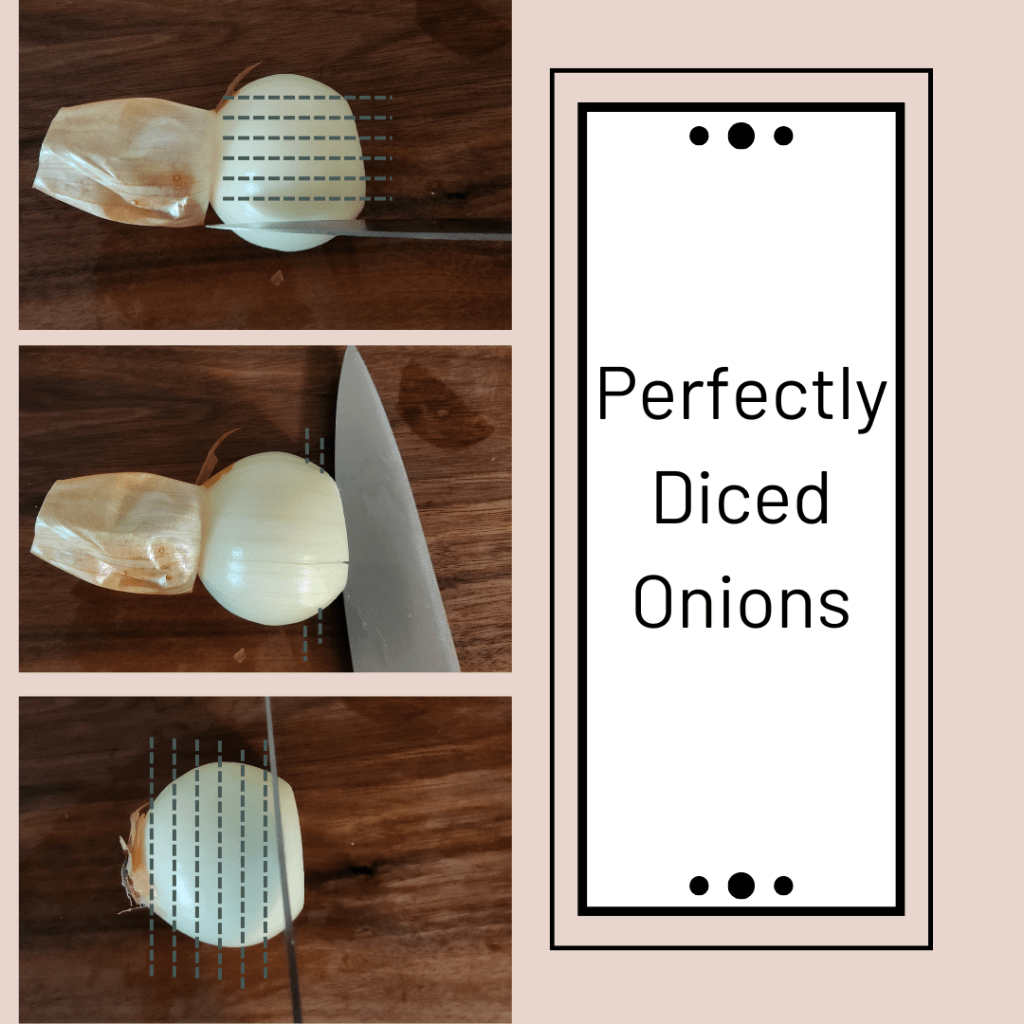
Now it is time to cut. To dice your onion into small pieces, begin by cutting across the top of the onion in the direction of root to stem. Do not cut fully into the root area, this will allow the onion to maintain its shape as you continue to cut in other directions.
Next, cut horizontally through the onion. This is where you need to be especially careful of your fingers. Typically you only need to cut in this direction twice.
Finally, you will cut across the top of the onion again, but this time it is across the body of the onion. If you want longer onion slices, you can skip the previous two steps and just do this step. See image below for a diagram of the three steps.
And just like that, you are done dicing up your onion. You have some options of what to do with the leftover root and skin. You can compost, toss it in the trash, or – my preferred method – save in a container in the freezer along with other vegetable scraps to make vegetable broth. But that is a post for a later date.

Leave a comment